Engine Air Filter vs. Cabin Air Filter: How to Check and Replace Both
Your car has two air filters, and most drivers only know about one of them. The engine air filter protects your motor. The cabin air filter protects you. Both are cheap, easy to check, and usually ignored until there’s a symptom: sluggish acceleration, a musty smell from the vents, weak A/C airflow. Here’s how to tell them apart, inspect each one in minutes, and replace them yourself.
Two Filters, Two Different Jobs
The engine air filter cleans the air your engine breathes in. Every gallon of fuel your engine burns takes in thousands of gallons of air, and that air carries dust, pollen, sand, and road grit. The filter traps it before it can wear internal parts or foul sensors. A clogged engine filter chokes airflow, and the engine has to work harder for the same power — you’ll feel it as lazy throttle response and see it as dropping fuel economy.
The cabin air filter cleans the air coming through your heating and A/C into the passenger compartment, trapping pollen, dust, exhaust soot, and leaf debris. When it’s saturated, airflow drops, the A/C struggles, windows fog more easily, and a musty odor shows up when the fan kicks on. Allergy sufferers feel a fresh one on the first drive.
Tesla owners: Model 3 and Model Y cabin filtration is a known weak point when the filters age out — a musty, vinegar-like smell from the vents is the classic tell. A set of activated-carbon cabin filters for Model 3 and Model Y handles both particles and odors, and the pair design matches how those cars are set up from the factory.
Signs Both Filters Are Due
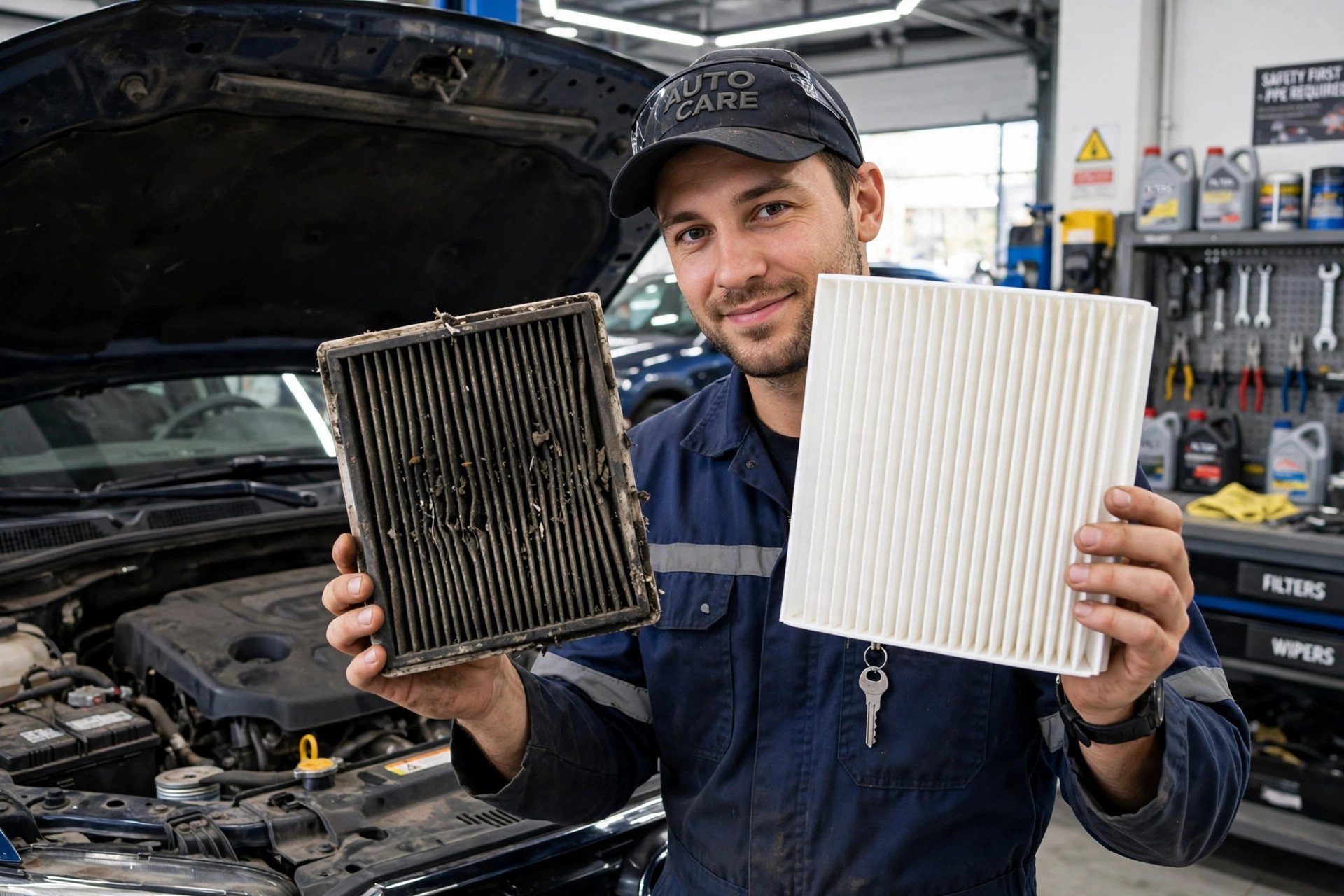
You don’t need a warning light for either filter — you need your eyes and nose. Check the engine air filter if you notice reduced acceleration, worse gas mileage than usual, or an engine that just feels breathless. Pull it out and hold it up to a light: a clean filter is white or off-white and lets light through the pleats. Gray, black, or packed with debris means it’s done.
Check the cabin filter if the vents blow weak on high fan, the A/C cools slowly, or there’s a musty smell at startup. One that comes out dark gray and full of grit is overdue. Don’t bang it clean and reinstall it — the fine particles stay embedded in the media. Filters are wear items; replacement is the fix.
How to Check and Replace Them
Start with the engine filter. On most cars it lives in a black plastic box in the engine bay, held by clips or a few screws. Engine off, pop the clips, lift the lid, and note which way the old filter faces before you pull it. Wipe any loose debris out of the empty box, seat the new filter with the seal fully nested, and close the lid evenly so no unfiltered air sneaks past the edges. It’s a ten-minute job on most vehicles — consult your vehicle’s manual for the exact location and any model-specific steps.
The cabin filter usually hides behind the glove box or under the dash on the passenger side. Open the glove box, squeeze or unclip its stops so it drops down, and you’ll find a slim access panel. Slide the old filter straight out — note the airflow arrow printed on its frame — and slide the new one in facing the same direction. Put on a pair of disposable nitrile gloves before you start: an old cabin filter is a concentrated sample of everything your car has driven through, and you don’t want it on your hands. Start to finish, most cabin filters swap in fifteen minutes with no tools beyond maybe a screwdriver.
Thinking about performance intakes? A washable-style cone filter on a proper intake setup is a different animal from a stock paper panel — if you’re upgrading, a 76mm universal high-flow cone filter kit is the standard 3-inch fitment most short-ram setups use. Just remember a cone filter only helps if the rest of the intake path is matched to it.
What You’ll Need
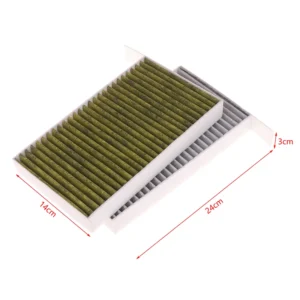
2Pcs/Set Cabin Air Filters for Tesla Model 3 / Model Y (Activated Carbon) — $12.99
Dual-effect activated carbon filters that trap particles and absorb vent odors — the fix for the classic musty Model 3/Y A/C smell. Sold as the correct 2-piece set.
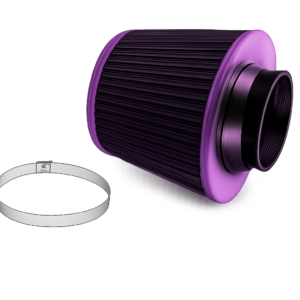
76MM Universal High-Flow Cone Air Filter Kit (3 Inch) — $19.99
Mesh cone engine filter and vent filter kit in the universal 3-inch (76mm) fitment for intake upgrades and replacements. High-flow design with engine protection built in.
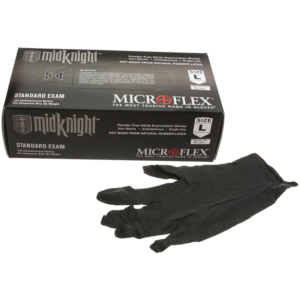
Nitrile / Latex Disposable Gloves — $24.99
Keep a box on the bench for filter swaps, fluid checks, and every other dirty job. An old cabin filter is filthy — glove up, bag it, and toss it.
How Often Should You Replace Them?
As a general guide, most manufacturers call for the engine air filter roughly every 15,000 to 30,000 miles and the cabin filter every 15,000 to 25,000 miles — but your manual’s schedule wins, and conditions matter more than the calendar. Long Island driving is hard on filters: pollen, construction dust, beach sand, and stop-and-go traffic load them up fast. Park under trees or drive dusty roads? Check both once a year and replace on condition, not just mileage. A filter that still looks clean can honestly stay.
Fresh Air, Inside and Out — at DAutoHaus
Two filters, under half an hour, no shop bill — this is the easiest maintenance win on your whole car. The cabin filter set, cone filter kit, and gloves above are all in stock and shipping to your door, alongside the filters, fluids, and shop supplies your garage runs through. Not sure which filter your car takes? Call or text us at (631) 800-9911 — we’re right here on Long Island and we’ll get you the right part the first time.
DAutoHaus — your shop supply source. Long Island, NY. dautohaus.com — (631) 800-9911.