
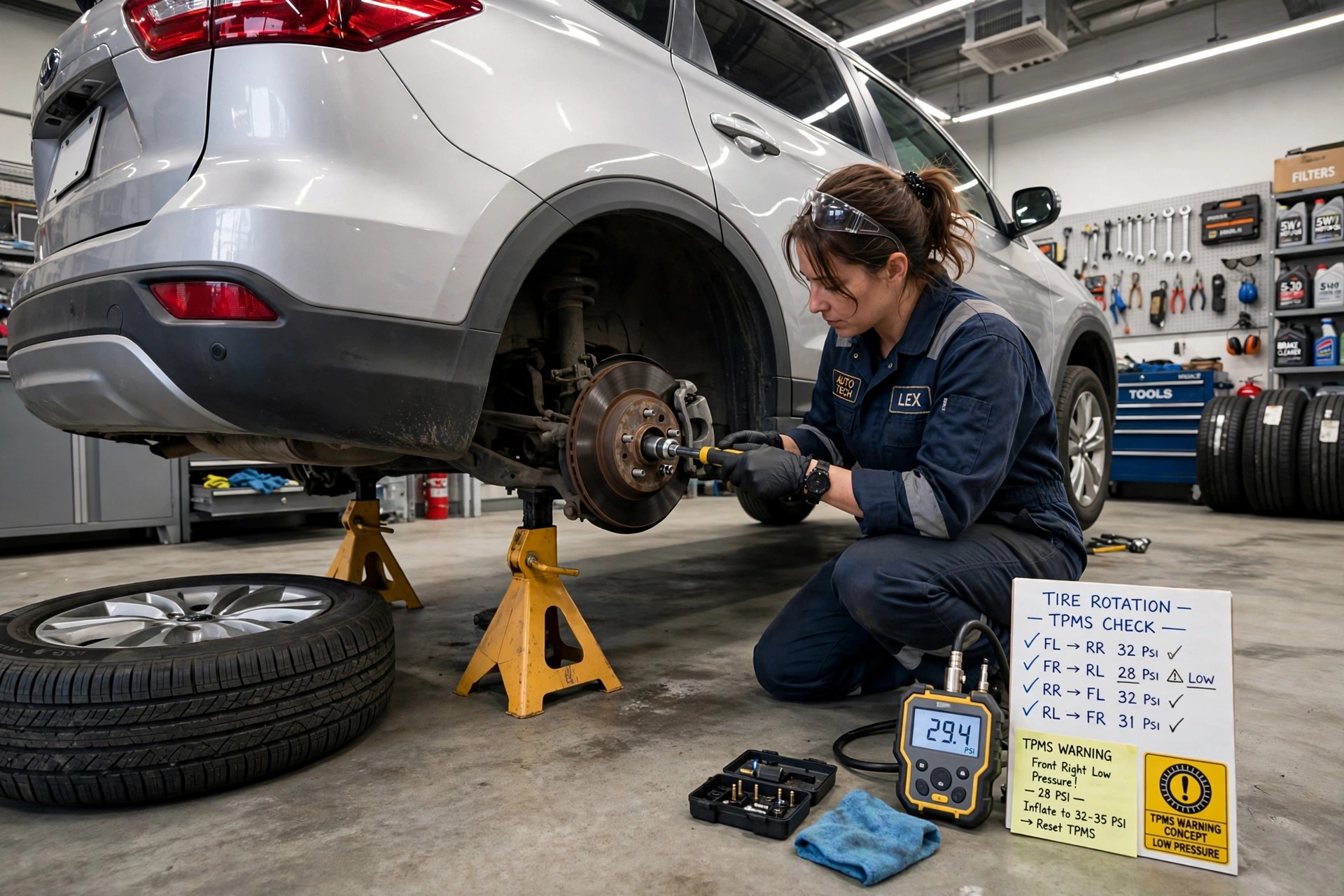
How to Rotate Your Tires at Home (and What Your TPMS Light Is Really Telling You)
Tires wear where they work. Front tires on a front-wheel-drive car steer, pull, and carry most of the braking load, so they wear down far faster than the rears. Left unrotated, you can kill a front pair while the rears still look new — and then you are buying tires two at a time and never getting the full life you paid for. Rotating on schedule evens that wear out, keeps handling predictable, and gives you a forced inspection of brakes, pressure, and tread every few thousand miles.
When to Rotate — and When to Just Replace
For most cars, rotate every 5,000 to 7,500 miles — tying it to every oil change makes it impossible to forget. Check your owner’s manual: it will give both the interval and the correct rotation pattern for your drivetrain. Front-wheel drive, rear-wheel drive, all-wheel drive, directional tires, and staggered fitments (wider rears than fronts) all rotate differently, and directional or staggered setups may only swap front-to-back on the same side, or not rotate at all.
Rotation is maintenance, not a cure. Skip the rotation and go straight to replacement or a shop if you find tread at or below 2/32 inch (the wear bars flush with the tread), cracks or dry rot in the sidewall, a bulge, exposed cord, or uneven wear that points to an alignment or suspension problem — one shoulder bald, feathering you can feel with your palm, or cupping. Rotating a damaged tire just moves the problem to a different corner.
What You’ll Need
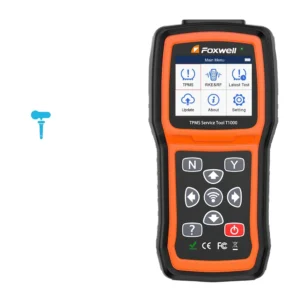
2025 Foxwell T1000 TPMS Diagnostic Tool — $132.99 — After a rotation, many cars need a TPMS relearn so the dash shows each pressure at the correct corner. The T1000 activates and reads TPMS sensors, helps diagnose a dead sensor battery, and runs the relearn instead of leaving you guessing at the light.
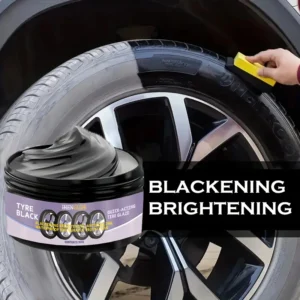
Tire Polishing Protective Paste, 100g — $14.99 — While each wheel is off and easy to reach, clean and dress the tire. Long-lasting gloss and protection against road grime, and the job takes a fraction of the time when the wheel is already in your hands.

Nitrile / Latex Disposable Gloves — $24.99 — Brake dust, road tar, and tire dressing are filthy work. Gloves on for the whole job, especially when you are running your palm over tread feeling for feathering and nails.
You will also need a floor jack and jack stands, a lug wrench, a torque wrench, wheel chocks, a tire pressure gauge, and your vehicle’s manual for the rotation pattern and lug torque spec. Never work under a vehicle supported by a jack alone — jack stands, always.
How to Rotate, Step by Step
1. Work safe and cold. Park on flat, solid ground, engine off, tires cold. Chock the wheels that stay down. Before lifting, break each lug nut loose about a half turn — they are far easier to loosen with the tire on the ground.
2. Lift one corner at a time. Jack at the factory lift point in your manual, set a jack stand, and give the car a firm check for stability before the wheel comes off. Follow your manual’s rotation pattern exactly as you move each wheel to its new corner — pattern matters more than speed.
3. Inspect while it is apart. This is the real value of the job. Spin each wheel and look for nails, cuts, and bulges. Run a gloved palm over the tread both ways: smooth one way and sharp the other means feathering. Look at brake pad thickness and check for a damp caliper or hose. Dress each tire with the tire polishing paste while access is easy.
4. Mount and torque correctly. Hand-start every lug nut before tightening anything. Snug them in a star pattern, lower the car, then torque to the spec in your manual in the same star pattern. Re-check torque after about 50 miles — lugs can settle as the wheel seats.
5. Set pressures cold. Inflate to the pressure on the driver’s door-jamb placard — not the maximum printed on the tire sidewall. Check all four, plus the spare while the trunk is open.
What Your TPMS Light Is Really Telling You
A steady TPMS light on a cold morning usually means one or more tires is significantly underinflated — pressure drops roughly 1 PSI for every 10 degrees the temperature falls, which is why the light loves the first cold snap on Long Island. Set the pressures cold, drive a few miles, and the light should clear. A light that flashes for about a minute at startup, then stays on, means a system fault — often a sensor with a dead battery (sensors typically last five to ten years), not low pressure at all.
After a rotation there is a third possibility: the pressures are fine, but the car still thinks each sensor sits at its old corner, so the dash display and the actual tire do not match. That is a relearn, and it is exactly what a tool like the Foxwell T1000 is built for — activate each sensor, confirm its ID and pressure, and teach the car the new positions. Never just ignore the light: it is the only warning you get before an underinflated tire overheats, wears its shoulders bald, or fails outright.
Make It a Habit, Not a Project
Rotate with every oil change, set pressures monthly, and inspect while the wheels are off, and a set of tires will give you every mile it was built for. Need a TPMS tool, tire care, gloves, or a hand reading a wear pattern? Shop at dautohaus.com — DAutoHaus serves drivers and shops across Long Island with parts, tools, and tires that ship to your door. Questions? Call or text (631) 800-9911 and we will help you get it right.