How to Test a Car Battery (and Tell If It’s the Battery, Starter, or Alternator)
Slow cranking on a cold morning. A click instead of a start. Dash lights that dim when you turn the key. Those symptoms get blamed on “a dead battery” almost every time — but the battery is only one of three usual suspects. The starter and the alternator can produce nearly identical complaints, and replacing the wrong part wastes money and leaves you stranded again next week. The good news: with one affordable tester and about fifteen minutes, you can separate the three before you buy anything.
The Signs a Battery Is Failing
Batteries rarely die without warning. Watch for a crank that sounds slower and lazier than it used to, especially after the car sits overnight. Look for headlights that brighten noticeably when you rev the engine, a battery warning light, or electronics that reset themselves. Age matters too: most car batteries last three to five years, and Long Island winters are hard on a weak one — cold thickens engine oil and makes the starter work harder exactly when a battery delivers its least power. If your battery is past four years old and mornings are getting harder, test it now instead of waiting for the first no-start in a parking lot.
Start with your eyes. Pop the hood and look at the terminals. Crusty white, blue, or green buildup is corrosion, and corrosion alone can starve a starter even when the battery underneath is fine. Check both cables are tight — a terminal you can twist by hand is a problem by itself. If the case looks swollen or wet, stop: that battery needs replacing, not testing.
What You’ll Need
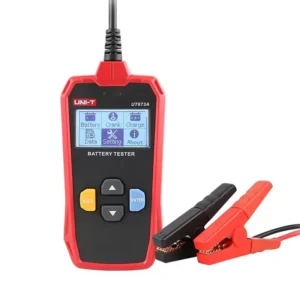
UNI-T UT673A Vehicle Battery Tester — $45.99 — Tests 12V and 24V batteries, plus cranking and charging systems, so one tool checks the battery and the alternator. This is the heart of the job.
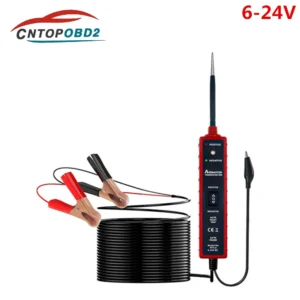
Automotive Electric Circuit Tester — $26.99 — For tracing power to the starter and checking fuses, grounds, and circuits when the battery tests good but the car still will not crank.
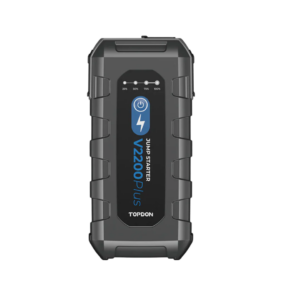
Topdon Battery Jumper Pack V2200PLUS — $149.99 — Your backup plan. A jump pack in the trunk turns a dead battery from a tow-truck call into a two-minute inconvenience, and it is the honest way to get a questionable car home for a proper test.

Nitrile / Latex Disposable Gloves — $24.99 — Battery terminals carry acid residue and corrosion. Gloves on before you touch anything, every time.
You will also want a wire brush or terminal cleaner, a wrench that fits your terminals, and your vehicle’s manual for any model-specific battery location or reset procedures.
How to Test the Battery, Step by Step
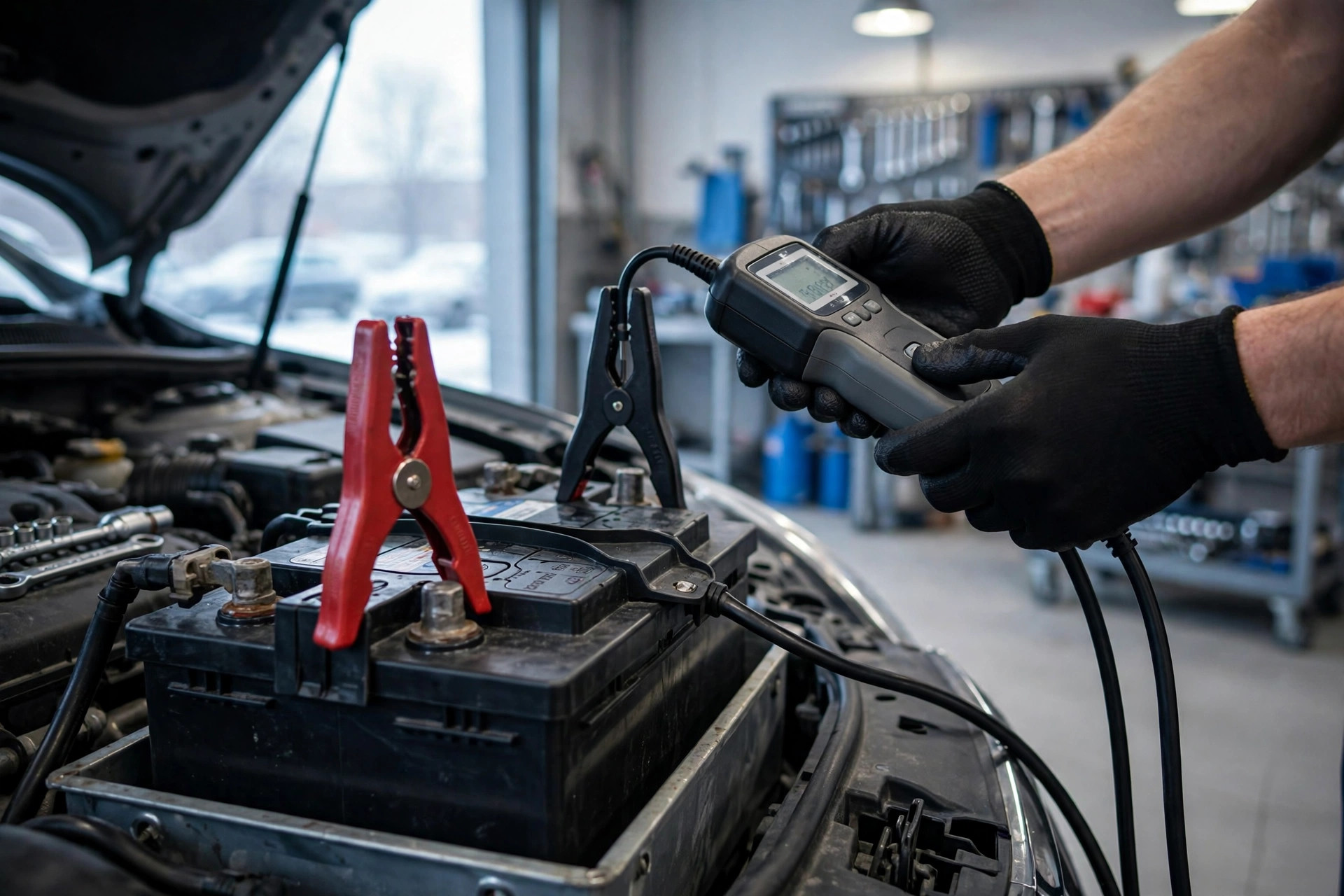
Test with the engine off and the car having sat for at least an hour if you can — testing right after a drive reads the surface charge, not the battery’s real condition. Connect the tester’s red clamp to the positive terminal and the black clamp to the negative, following the tester’s on-screen prompts. Enter the battery’s rating from its label when asked, then run the battery test.
A healthy, fully charged 12-volt battery rests at about 12.6 volts or higher. Around 12.4 volts is roughly three-quarters charged. At 12.2 volts it is about half charged, and at 12.0 or below it is effectively discharged — either it needs a full charge and a retest, or it is done. Just as important is the health reading: a tester like the UNI-T UT673A estimates the battery’s remaining capacity against its rated cranking amps. A battery can show decent voltage and still fail under load, which is exactly the trap a simple voltage check misses.
Next, run the cranking test: start the car while the tester watches. Voltage that collapses deeply during cranking points back at a weak battery or a bad connection. Then run the charging test with the engine running. That is your alternator check, covered next.
Battery, Starter, or Alternator? How to Tell
Alternator: with the engine running, a healthy charging system typically holds roughly 13.8 to 14.4 volts at the battery. Well below that range suggests the alternator is not charging — the battery was probably the victim, not the cause, and a new battery alone will die the same way. Well above it suggests overcharging, which cooks batteries. Either way, fix the charging system first.
Starter: if the battery tests healthy, charging voltage is normal, cables are clean and tight, and you still get a single click or no crank, suspicion moves to the starter or its circuit. That is where an automotive circuit tester earns its keep — it confirms whether power is actually reaching the starter when the key turns. Power arriving but no crank usually means the starter itself. No power means you are tracing a fuse, relay, ground, or ignition switch instead — a much cheaper fix.
Battery: low resting voltage, failed capacity under load, and a charging system that tests normal — that combination is a battery you can replace with confidence.
Clean, Charge, Retest — Then Decide
Before condemning anything, clean the terminals until the metal is bright, tighten the clamps, fully charge the battery, and retest. Corrosion and a half charge fake more “dead batteries” than real failures do. If a charged, clean-connected battery still fails the load test, replace it — and match the group size and cranking-amp rating your manual specifies. Work safely throughout: no smoking or sparks near a battery, remove jewelry, and consult your vehicle’s manual for jump-starting and battery-removal procedures specific to your model.
Need the tester, a jump pack for the trunk, or a hand sorting out a no-start? Shop at dautohaus.com — DAutoHaus serves drivers and shops across Long Island with parts, tools, and diagnostics gear that ships to your door. Questions? Call or text (631) 800-9911 and we will help you test before you guess.