What That Little Orange Light Actually Means
When the check engine light pops on, most drivers feel a knot in their stomach — and most DIYers immediately reach for Google. Here’s the truth: that light is your car’s way of handing you a note. An OBD2 scanner lets you read it. Every car sold in the US since 1996 has an OBD2 port, and learning to pull your own codes turns a mystery into a to-do list.
For shop owners, this is table stakes. For DIYers, it’s the single skill that separates guessing from diagnosing. Let’s walk through it.
Step 1: Find the OBD2 Port
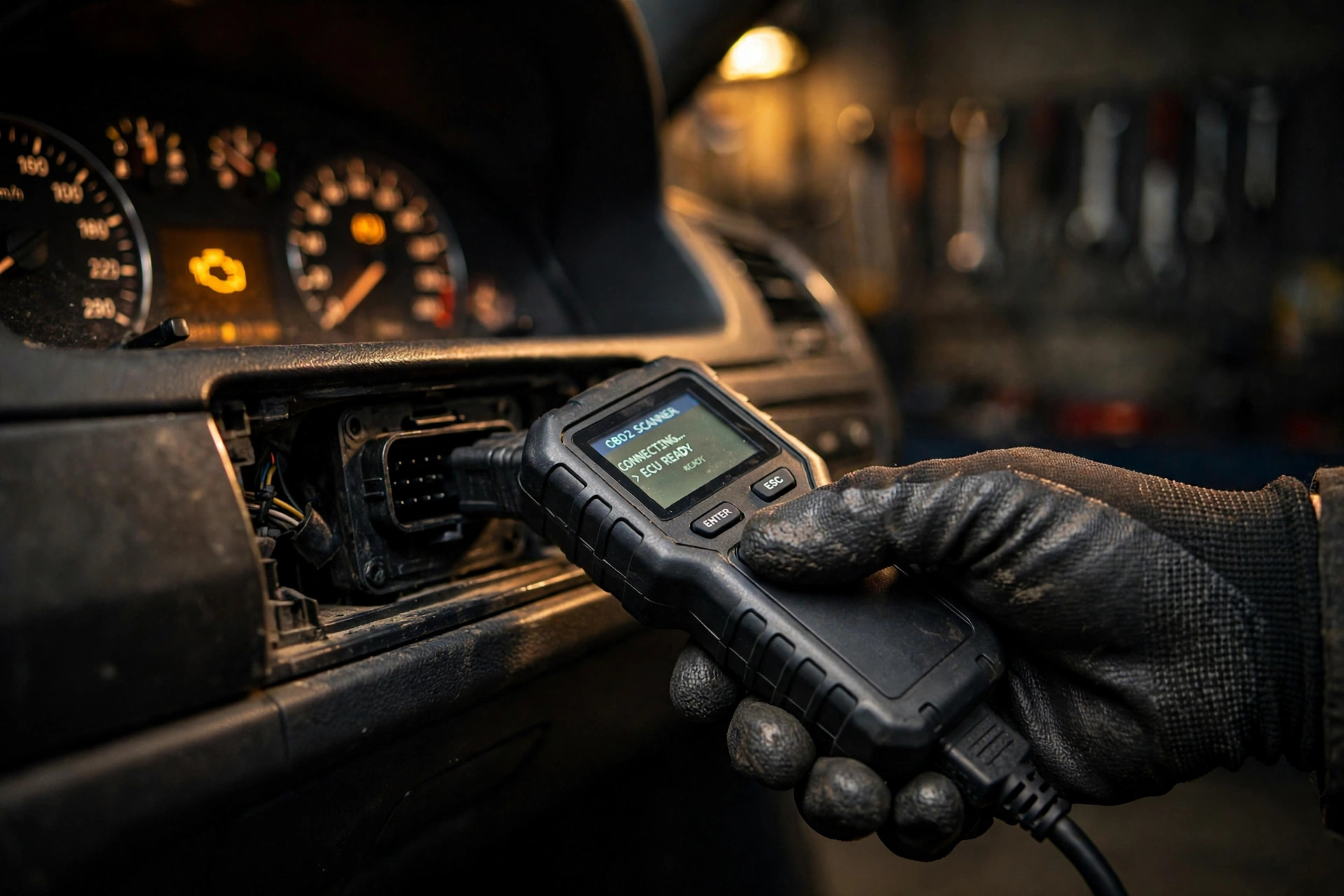
The 16-pin OBD2 connector lives under the dash on the driver’s side in almost every vehicle — usually within a foot or two of the steering column. Sometimes there’s a small plastic cover over it. No tools needed; it plugs in by hand. Turn the ignition to the ON position (engine off is fine for most code reads) and you’re ready.
Step 2: Plug In and Read the Codes
Connect your scanner, let it power up from the port, and select “Read Codes.” In about 30 seconds you’ll see codes that look like P0300, B0021, or C1234. That first letter matters: P = powertrain (engine/transmission), B = body, C = chassis, U = network/communication. Write them down before you do anything else — clearing codes before recording them throws away your best evidence.
If you run a shop, a dedicated code reader like the Advanced Car Diagnostic Tool Plus (upgraded MS309 OBD2 scanner) earns its keep fast: plug in, read, and hand the customer a straight answer instead of a shrug.
Step 3: Translate Codes Into Action
A code is a starting point, not a diagnosis. P0301 means a misfire on cylinder 1 — the cause could be a spark plug, a coil, an injector, or low compression. Use the code to narrow the search, then test:
- Misfire codes (P030x): inspect plugs and coils; swap the coil to another cylinder and see if the code follows it.
- Lean/rich codes (P0171/P0172): check for vacuum leaks, dirty MAF sensor, or fuel delivery issues.
- EVAP codes (P0440–P0457): start with the gas cap — a loose or cracked cap is the most common cause, full stop.
- Sensor circuit codes: this is where an automotive circuit tester pays off — verify power and ground at the sensor before replacing parts.
Pro tip: if the check engine light is flashing, that’s a severe misfire that can damage the catalytic converter. Stop driving and get it checked the same day. A steady light means “schedule a diagnosis soon,” not “panic.”
Step 4: Fix, Clear, and Verify
Make the repair, then use the scanner to clear the codes. Now drive normally for a few days — the car’s monitors need to complete their self-tests. If the light stays off and no codes return, you’re done. If it comes back, you know exactly which system to dig into next instead of starting from zero.
One more thing shops see constantly: a weak battery causes phantom codes. If your scan shows a scatter of unrelated codes, test the battery first — the MaxiBAS BT608 battery tester checks cranking health and charging system in minutes. Chasing codes with a dying battery is how you replace parts that were never broken.
What You’ll Need
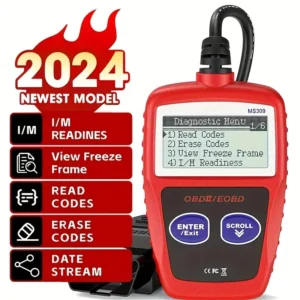
Advanced Car Diagnostic Tool Plus — upgraded MS309 OBD2/OBDII/EOBD fault code reader ($15.99)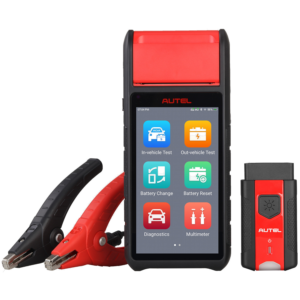
Battery Tester, MaxiBAS BT608 ($850.00)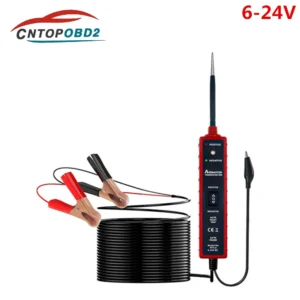
Automotive Electric Circuit Tester ($26.99)
Stop Guessing, Start Diagnosing
A check engine light is information, not a verdict. With a scanner in the glove box and a few minutes under the dash, you can walk into any repair — DIY or at the shop — knowing exactly what’s wrong.
DAutoHaus — your shop supply source on Long Island. Browse the full diagnostic lineup at dautohaus.com, or call/text (631) 800-6019 with questions. Commercial accounts and local delivery available across Suffolk and Nassau counties.